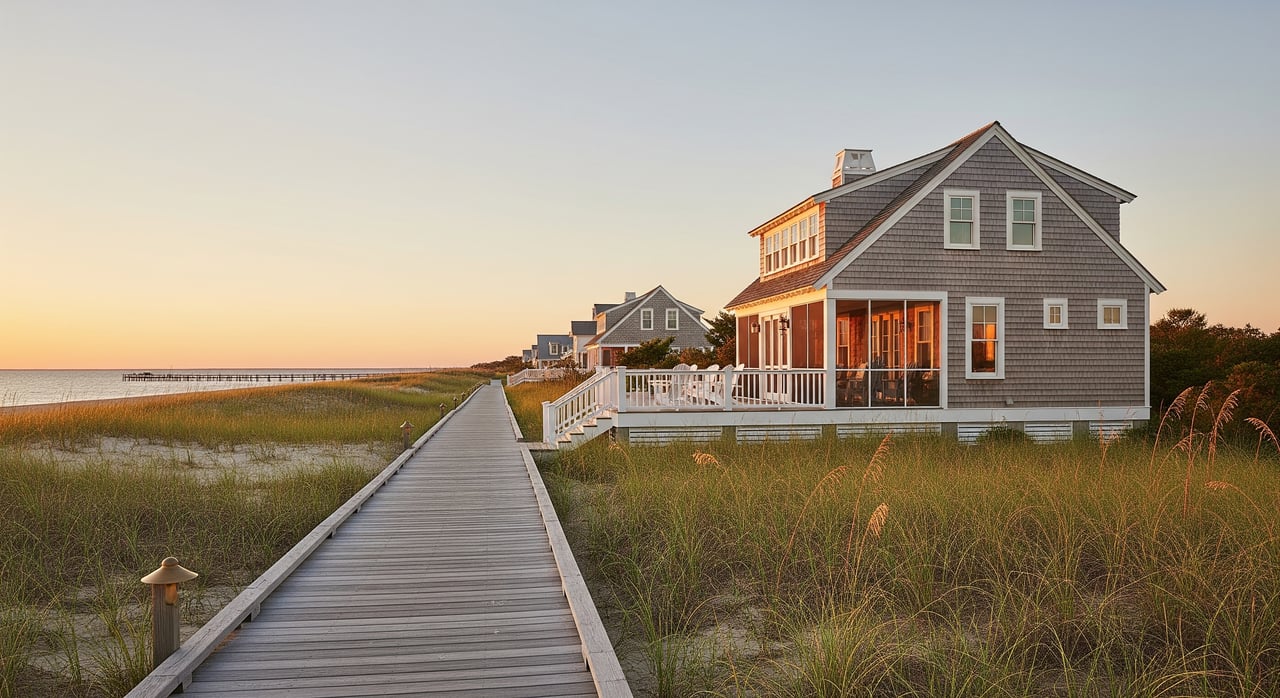
Thinking about living steps from sound-side sunsets, shops, and a laid-back village vibe? The Duck boardwalk puts you close to everything, with water views and a walkable lifestyle that is hard to beat. At the same time, coastal ownership brings its own set of rules, risks, and maintenance realities. In this guide, you will learn what day-to-day life feels like, how the real estate works, what to check for insurance and permits, and how to plan for rentals or resale. Let’s dive in.
Life near the Duck boardwalk
Walkability and water views
Living near the Duck boardwalk means you can walk to dining, galleries, small parks, and seasonal events. The village core centers around the pedestrian walkway and soundfront views, so errands and sunset strolls feel effortless. Homes and condos nearby typically enjoy easy access to amenities without needing to drive for every outing.
Seasonality and crowds
Summer is lively with foot traffic, later business hours, and more evening activity. Spring and fall are calmer, and winter is the quietest period. This rhythm affects noise, parking availability, and even how often you head out on foot versus by car.
Events and daily rhythm
Expect a community feel with small events and a friendly, walkable pace. During peak months, the village buzz can feel like a bonus if you enjoy energy and convenience. In the off season, you get a peaceful coastal setting with fewer lines and easier parking.
Homes and property types
Single-family and condos
You will find elevated single-family cottages, newer homes designed for coastal conditions, and condo or townhome communities. Many homes use materials suited to salt air, like composite decking and corrosion-resistant fasteners. Elevated foundations, pilings, and raised utilities are common.
Ownership patterns and rentals
The ownership mix includes full-time residents, second-home owners, and vacation rental operators. Some properties are primarily short-term rentals that rely on summer income. If you plan to rent, confirm rules and taxes before you buy.
What commands a premium
Proximity to the boardwalk and water views often command higher prices. Walkability and easy access to the village can be a major value driver compared to similar homes farther inland. Buyers also look for low-maintenance exteriors, storm-ready features, and updated systems that perform well in a coastal climate.
Rental potential and rules
Vacation rental demand in Duck is historically strong in summer, though income is seasonal and weather sensitive. If you intend to rent, verify local requirements for transient occupancy taxes, any registration or permit needs, and HOA or condo rules. Make sure you understand parking limits, guest access instructions, and house rules that may apply to your home.
- Buyers: Request verified rental statements, occupancy data, and expense details, including management fees and utilities.
- Sellers: Prepare accurate rental histories and income statements, plus clear documentation of expenses and house rules.
- Everyone: Confirm compliance with town and county rules, tax remittance, and any HOA restrictions before you list or book guests.
Coastal risks and insurance
Flooding and erosion basics
Like much of the Outer Banks, Duck faces exposure to storm surge, overwash, and long-term sea-level rise. Beach nourishment and dune work have occurred in parts of Dare County and can help reduce erosion, but they require coordination and periodic maintenance. Before you buy, review FEMA flood maps for your property, ask for an Elevation Certificate, and look into historical storm and erosion records for the specific lot.
Insurance coverage and deductibles
Coastal owners usually carry a homeowners policy that covers wind or hurricane perils and a separate flood policy. Expect percentage-based deductibles for named storms in some policies. Because premiums and availability change over time, get property-specific quotes and ask for the home’s prior claims history before finalizing an offer.
Building codes and permits
Coastal construction must follow state and local standards for elevation, piles, wind loads, and flood-resistant design. Planned renovations may need permits from the Town of Duck and state coastal agencies, especially for work impacting dunes or the seaward environment. Keep elevation certificates and floodproofing documentation organized for future resale and insurance purposes.
Everyday logistics
Parking and access
In peak months, parking can be tight near the boardwalk. Some older cottages have limited on-site spaces and may rely partly on public or time-limited parking. If you host guests or operate a rental, be clear about the number of vehicles allowed and where they can park.
Utilities and services
Confirm whether a property uses municipal services or has a private septic or well. Utility availability can affect renovation plans, insurance, and long-term costs. Trash and recycling schedules often shift between summer and the off season, and HOAs may set placement and timing rules.
Maintenance in salt air
Salt air and humidity speed up wear on HVAC components, exterior fasteners, metal fixtures, and wood decking. Plan for frequent servicing and proactive upkeep to prevent corrosion and moisture issues. Elevated homes require attention to stairways, pilings, bracing, and any lower-level enclosures.
Safety and evacuation
Know your evacuation routes, especially during hurricane season. Traffic and response times can be affected in busy months, so plan ahead. Identify the closest healthcare and emergency services for peace of mind.
Due diligence checklist
Before you make an offer, gather and verify the following:
- Elevation Certificate and current FEMA flood map zone reference
- Property-specific flood and wind insurance quotes, plus prior claims history
- Building permits and code compliance records, including any dune or shoreline work
- HOA or condo documents: rental rules, parking limits, reserves, special assessments, and maintenance schedules
- Verified rental income statements and occupancy data if buying for investment
- Structural inspection focused on pilings, bracing, corrosion, roof, and exterior siding
- Septic inspection if applicable, and utility capacity confirmation
- Transient occupancy tax registration requirements and evidence of compliance
- Coastal construction and erosion history, including any nourishment or renourishment plans
Tips for sellers near the boardwalk
Highlight what boardwalk buyers value and stay transparent about coastal realities:
- Prepare verifiable rental histories, net income statements, and expense breakdowns
- Organize disclosures on flood history, insurance claims, and structural repairs
- Gather permits for renovations or any dune or shoreline modifications
- Stage to showcase walkability, water views, and access to amenities while noting stairs, parking capacity, and seasonal noise expectations
Is boardwalk living right for you?
If you love walkability, sunsets over the sound, and a vibrant summer scene, the Duck boardwalk area delivers a special coastal lifestyle. If you prefer quiet year-round living, focus on location specifics and seasonality to match your comfort level. Either way, plan for coastal maintenance, confirm insurance and permits early, and review rental rules if income matters to your goals. Ready to explore homes that fit your plan? Reach out to the team at OBX Beach Properties for local guidance.
FAQs
How noisy is living by the Duck boardwalk?
- Expect lively summer evenings and weekends, with quieter fall and winter months; exact noise levels depend on your property’s proximity to the village core and the boardwalk.
Do Duck boardwalk homes require flood insurance?
- If a lender identifies a Special Flood Hazard Area, flood insurance is typically required; many coastal owners carry a policy even when not required.
Can you operate a short-term rental in Duck?
- Possibly, but you must confirm town and county rules, handle occupancy taxes, and follow any HOA or condo restrictions on rentals and parking.
What maintenance costs should you expect near the boardwalk?
- Plan for higher-than-inland upkeep, including corrosion control, HVAC servicing, exterior repainting or sealing, and attention to pilings, decking, and fasteners.
Do properties near the boardwalk hold value over time?
- Proximity and walkability drive demand, but values can be sensitive to storm events, insurance costs, and broader market cycles; strong documentation of rental and maintenance history supports resale.
