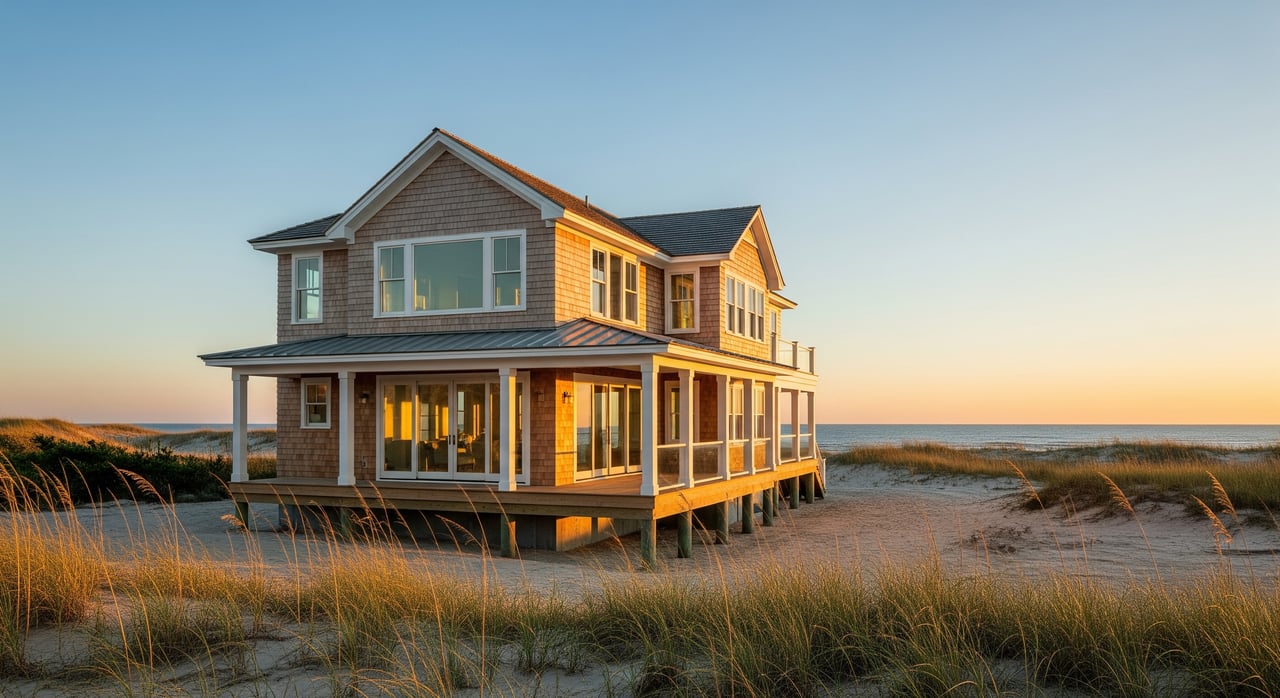
Thinking about turning your Salvo lot into a beach home? Between coastal rules, flood standards, and island logistics, the path can feel confusing. With a clear plan, you can move from idea to Certificate of Occupancy with fewer surprises. In this guide, you will learn the key permits, the agencies involved, common constraints, and a realistic build timeline for Salvo on Hatteras Island. Let’s dive in.
Who approves your project
Building in Salvo involves county, state, and sometimes federal review. Dare County handles building permits and inspections. The North Carolina Division of Coastal Management administers CAMA coastal permits. FEMA flood rules are enforced during county permitting, and the U.S. Army Corps of Engineers may be involved if wetlands or tidal areas are affected.
Your project may also need input from the North Carolina Department of Transportation for NC‑12 driveway access and from local utility providers for service connections. Early coordination helps you avoid conflicting requirements.
Required permits in Salvo
Dare County building permit
You will submit architectural and engineered foundation plans that meet the NC Residential Code and local ordinances. Expect review to take a few weeks to a couple months once supporting approvals are in place. The county issues the Certificate of Occupancy at the end of construction.
CAMA coastal permit
Projects near the ocean and dunes often need a CAMA permit. Minor CAMA permits can take weeks to a couple months. Major CAMA permits for oceanfront or complex work can take several months and may include public notice. Determining minor versus major status early is critical.
Floodplain compliance and Elevation Certificate
Many Salvo lots are in FEMA AE or V zones. You will need to meet base flood elevation plus any local freeboard and document it with an Elevation Certificate. In V zones, open pile foundations and limits on enclosures below the first floor typically apply.
Septic permit and soil evaluation
Dare County Environmental Health will evaluate soils and groundwater to design and approve your septic system. Coastal sands and high water tables may require engineered or alternative systems. Testing, design, and permitting can take 4 to 12 or more weeks.
US Army Corps of Engineers review
If your work impacts jurisdictional wetlands, tidal waters, or areas below mean high water, federal permits under Sections 10 or 404 may apply. Timelines range from weeks to many months depending on scope and verification.
NCDOT driveway/access permit
New or modified access to NC‑12 requires NCDOT approval. Allow several weeks for review and coordinate any site work that affects the public right of way.
Utility service coordination
Plan for electric, propane, telecom, and possibly private well coordination. Scheduling meter sets or extending service can add weeks or months, especially on Hatteras Island.
Dune and vegetation protections
Dune systems and the first line of stable vegetation are protected. Removing vegetation, grading dunes, or installing crossovers typically requires approvals and may include mitigation.
Seasonal wildlife rules
Sea turtle nesting and shorebird protections can affect exterior work, lighting, and dune activity, especially between spring and fall. Expect seasonal limits or required lighting design measures.
Realistic build timeline
Timelines vary by lot location, flood zone, septic feasibility, and whether you need a major CAMA permit.
- Pre‑purchase due diligence: 2 to 8 weeks
- Review flood maps and any past permits, order recent surveys, and consider a coastal feasibility check with local professionals.
- Surveys and soil testing: 2 to 6 weeks
- Boundary, topographic, and dune surveys to confirm the first line of stable vegetation. Soil and groundwater checks for septic feasibility.
- Design and permit prep: 3 to 8 plus weeks
- Architectural plans, engineered piling plans, septic design, and a site plan that addresses setbacks and elevations.
- CAMA review: minor 2 to 8 weeks, major 2 to 6 plus months
- Oceanfront or dune‑related work triggers longer review and conditions.
- County building permit review: 2 to 8 weeks
- Dare County checks code, floodplain, and local requirements. Complex designs may need resubmission.
- Utility and septic: 4 to 12 plus weeks
- Schedule pole or line extensions, meter sets, and septic installation.
- Foundation and elevation work: 2 to 6 weeks
- Pile driving or equivalent, followed by elevation survey for the Elevation Certificate.
- Framing and exterior: several months
- Weather, material deliveries, and labor supply on the island can extend duration.
- Final inspections and CO: 1 to 4 weeks
- Complete final approvals, including septic final, to receive the Certificate of Occupancy.
Bold timelines to keep in mind:
- Straightforward inland‑of‑setback builds: 4 to 9 months from early prep to CO.
- Oceanfront or complex builds: 6 to 12 plus months, longer if there are federal permits, engineered septic, or seasonal limits.
Coastal constraints to plan for
- Flood zones and foundations: V‑zone parcels often require pile foundations, open lower levels, and breakaway walls where applicable. Structural and insurance considerations increase with wave exposure.
- Ocean hazard setbacks: The buildable area depends on the first line of stable vegetation. This line can move, so a current coastal survey is essential.
- Septic feasibility: High water tables, sandy soils, and proximity to dunes can require engineered systems or reduce capacity. Confirm septic early.
- Seasonal restrictions: Sea turtle nesting season and shorebird protections can alter work hours, limit dune activity, and require turtle‑friendly lighting.
- Island logistics: Contractor availability, ferry and NC‑12 disruptions, and freight timing can affect schedule and cost.
Avoid these common delays
- Skipping a coastal survey to confirm the vegetation line and setbacks.
- Waiting to coordinate septic design until after architectural plans are final.
- Underestimating CAMA review time for oceanfront or dune‑impact work.
- Overlooking utility lead times, especially for new service extensions.
- Missing lender or insurer elevation requirements that exceed minimum code.
Step‑by‑step checklist
- Before you buy
- Review flood maps, prior permits, and any existing surveys.
- Order a coastal survey that shows the first line of stable vegetation and topography.
- Commission soil and percolation tests for septic feasibility.
- Ask for prior site plans or approvals from the seller.
- Early after purchase
- Schedule a pre‑application conversation with Dare County Planning and Inspections.
- Contact the state coastal management office for CAMA guidance on your lot.
- Confirm on‑site wastewater requirements with Environmental Health.
- Touch base with utility providers and NCDOT if a new driveway or access change is needed.
- Engage a local coastal architect and builder with Hatteras Island experience.
- During design and permitting
- Address flood elevation, pile design, and lighting that meets wildlife protections.
- Advance septic design in parallel with architectural plans.
- Build in contingencies for CAMA major permits and seasonal limits.
- During construction
- Schedule the elevation survey when the foundation is set.
- Organize final septic approval and prepare for county inspections.
- Keep copies of all permits and Elevation Certificates for insurance and future resale.
Seasonal timing on Hatteras Island
Weather, road access, and wildlife protections shape your schedule. Exterior and dune‑adjacent work often moves faster outside late spring to early fall when sea turtle activity peaks. If your project is oceanfront or near dunes, plan deliveries, lighting decisions, and exterior work windows around those seasonal limits.
Partner with local pros
Experience in V‑zone design, coastal surveys, and CAMA permitting saves time. A team that knows Dare County processes and Hatteras Island logistics can help you set realistic expectations, coordinate the right sequence, and avoid rework.
When you are ready to evaluate a Salvo lot or prepare for a sale, reach out to OBX Beach Properties. We offer local, relationship‑driven guidance to help you make confident decisions on the Outer Banks.
FAQs
How long do Salvo permits take for a new home?
- Minor coastal and county reviews can wrap in a few weeks to a couple months, while oceanfront or complex projects with major CAMA review can extend several months longer.
Do I have to elevate my Salvo home because of flood zones?
- Most lots fall in AE or V zones, so you should plan on elevated construction that meets base flood elevation plus any local freeboard documented by an Elevation Certificate.
Can I build anywhere on my Salvo lot near the ocean?
- Not always, since the buildable area is limited by ocean hazard setbacks tied to the first line of stable vegetation, plus dune protections and septic placement needs.
How does sea turtle season affect construction in Salvo?
- Seasonal protections can limit night lighting, dune work, and certain exterior activities, which may require design adjustments or timing changes between spring and fall.
What usually drives costs and delays when building in Salvo?
- Engineered pile foundations, septic system complexity, CAMA conditions, utility extensions, and island logistics such as deliveries and NC‑12 access are frequent drivers.
