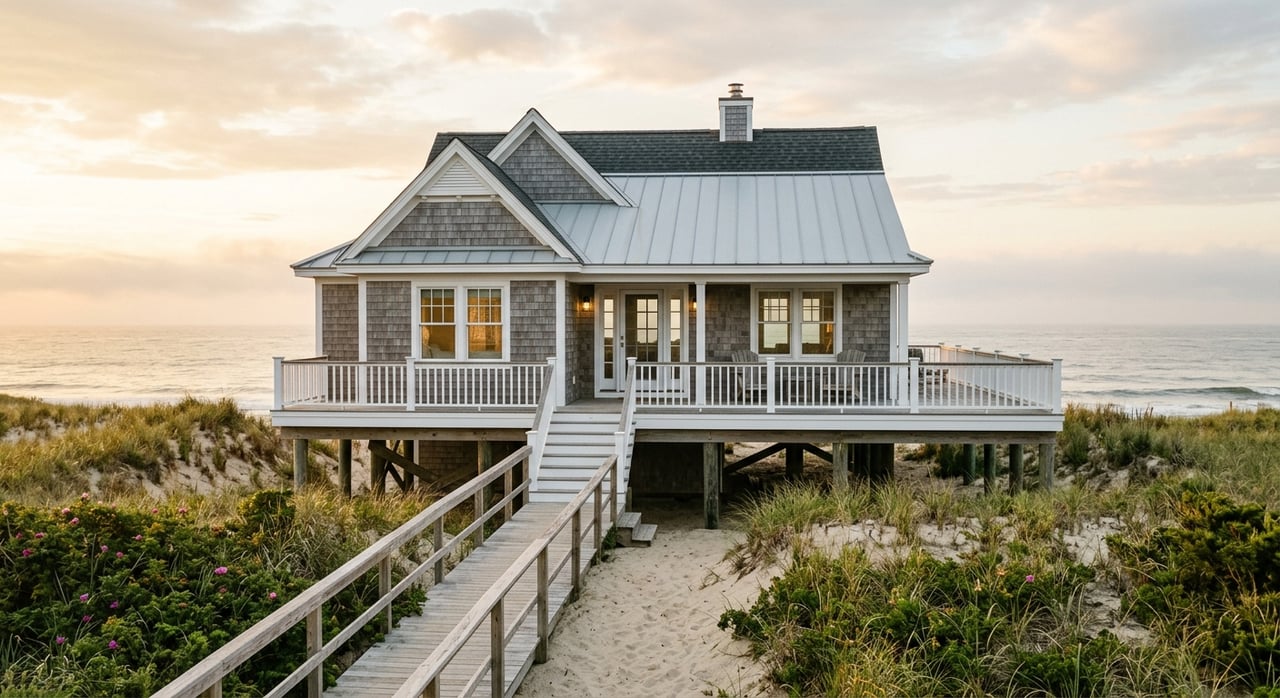
What does everyday life actually feel like when you own a second home in Hatteras Village? If you are considering a place here, you are probably looking for more than beach photos and listing details. You want to know how your mornings, errands, weekends, and off-season visits might really unfold. This guide will help you picture that day-to-day rhythm so you can decide whether Hatteras Village fits the kind of coastal life you want. Let’s dive in.
Hatteras Village has a water-first feel
Hatteras Village sits at the southern tip of Dare County, and local sources consistently describe it as a community shaped by the water. Fishing heritage, marinas, charter docks, and direct beach access are all part of the village identity. It feels tied to the sea in a practical, everyday way, not just as a scenic backdrop.
For many second-home owners, that matters because lifestyle here tends to feel grounded and low-key. Dare County highlights a 3.1-mile pathway running from the north entrance to the ferry docks, along with a village park, boardwalk, community building, and library area. Taken together, those features suggest a compact setting where daily routines can stay simple.
Daily life stays easy and casual
Hatteras Village is not built around a busy retail strip or a packed resort schedule. Day-to-day life is more about manageable errands, familiar stops, and relaxed outings. Local sources note shops, galleries, beach gear, tackle, souvenirs, and sundries that support everyday needs and spur-of-the-moment plans.
That can be a real advantage when you use your home for weekends, long holidays, or seasonal stays. You are less likely to feel pressure to plan every hour. Instead, life tends to revolve around the beach, the docks, a few local errands, and time outdoors.
Meals match the laid-back setting
Dining in Hatteras Village follows that same easy rhythm. The local tourism bureau describes the restaurant scene as beach casual, with fresh seafood alongside simple favorites like pizza and burgers. For second-home owners, that often means you can keep meals relaxed and flexible.
Some days that might mean grabbing something easy after time on the water. Other days, it might mean a simple dinner out without treating the evening like a big event. The overall feel is comfortable and unfussy.
Small outings fit into your routine
One of the more practical parts of village life is how easily a few activities can fit into one outing. Near the ferry landing, you will find the Graveyard of the Atlantic Museum and Hatteras Landing, which includes shopping, food, and a self-serve marina. That creates a useful cluster for a casual afternoon or a simple errand run with a waterfront view.
For a second-home owner, this kind of setup can make your time feel fuller without feeling rushed. You can combine a stop for supplies, a meal, and a walk near the water in one part of town. That is often the appeal of Hatteras Village in a nutshell.
Outdoor life shapes the weekly rhythm
If you own in Hatteras Village, outdoor time is likely to shape your routine as much as the home itself. Fishing is central to the village identity, and Cape Hatteras National Seashore offers surf, pier, inshore, and offshore fishing opportunities. The National Park Service notes that spring and fall are generally strong seasons, while midsummer is especially productive offshore.
That fishing culture is not tucked away in the background. Local tourism materials describe commercial marinas, charter docks, ORV ramps, and fish-and-tackle activity as part of the daily scene. Even if you are not fishing every trip, that working-waterfront energy still influences how the village feels.
Fishing here is part of local culture
For many owners, fishing becomes part of the rhythm of being in town. You may head out yourself, book a charter, watch boats come and go, or simply enjoy being in a place where the waterfront still supports daily work and recreation. Hatteras Village has a strong connection to boatbuilding and lifesaving and Coast Guard history, which adds to that sense of place.
If you plan to fish recreationally, the National Park Service notes that anglers age 16 and older need a North Carolina Coastal Recreational Fishing License in designated coastal and joint waters. That is one of the practical details worth understanding before you arrive for a longer stay.
Quiet water access matters too
Outdoor life here is not only about offshore action or surf fishing. Dare County notes that the soundside waters, creeks, and marshes around the village are good for kayaking and paddleboarding. Herons, osprey, and dolphins are commonly part of the setting.
That gives you another way to enjoy your second home, especially on quieter mornings or breezier beach days. Not every visit has to be built around the oceanfront. Sometimes the calmer side of village life is what makes owners want to keep coming back.
Community events keep the village connected
Second-home owners often want to know whether a place feels active only in peak vacation season. In Hatteras Village, the calendar suggests something more grounded than that. Community events reflect local traditions and help shape the social side of ownership.
Recent village materials point to summer fish fries, a July 4 celebration with a golf cart parade and community dinner, and fall events like the Surf Fishing Tournament and Day at the Docks. These are not just attractions for visitors. They reflect the village’s community identity and maritime roots.
Day at the Docks shows local character
One standout example is Day at the Docks. Village civic materials say the event began after Hurricane Isabel in 2003 as a celebration of the Spirit of Hatteras. It remains closely tied to the commercial and charter fishing community.
For second-home owners, events like this can make your time in town feel more connected to the place itself. You are not only using a property near the water. You are participating in a community with traditions shaped by working waterfront life.
The off-season is quieter, not empty
Another important point for second-home owners is that Hatteras Village does not simply shut down after summer. Late-winter and holiday events, including the Waterfowl Festival, tree lighting, and Breakfast with Santa, show that village life continues in quieter ways. The pace changes, but the social fabric stays present.
That can be especially appealing if you enjoy shoulder-season visits. You may find a more local atmosphere, lighter activity, and a calmer version of the same setting that drew you in during the busier months.
Practical realities matter for owners
A second home in Hatteras Village can offer a very appealing lifestyle, but it also comes with practical realities that shape ownership. One of the biggest is access. The Hatteras-Ocracoke ferry is part of the broader transportation picture, and the North Carolina Department of Transportation posts schedules and notifications for route changes.
That matters because timing can be more important here than in a mainland coastal town. NCDOT notes that route conditions can shift when navigation conditions such as shoaling require changes. If ferry travel is part of your plans, it helps to build in flexibility.
Barrier-island living is dynamic
The natural setting is beautiful, but it is also always changing. Cape Hatteras National Seashore explains that barrier islands are reshaped over time by storms, currents, erosion, overwash, wind, and sea-level change. Dare County has also expanded drone erosion monitoring to include Hatteras Village.
For owners, that does not mean avoiding the area. It means understanding the environment honestly. Part of living well here is appreciating that the landscape is active and coastal conditions are part of everyday decision-making.
Why Hatteras Village appeals to second-home owners
For the right buyer, Hatteras Village offers a very specific kind of second-home experience. It is quiet, connected to the water, and shaped by real local rhythms rather than a polished resort atmosphere. Daily life tends to center on the beach, the sound, the docks, casual meals, and community traditions.
That lifestyle can be a strong fit if you want your second home to feel restorative and authentic. You may still have plenty to do, but the tone is different. It is more about settling in than staying busy.
If you are weighing Hatteras Village against other Outer Banks areas, this is often the key distinction. You are not just choosing a house. You are choosing a pace, a setting, and a way of spending your time that feels closely tied to the water and the community around it.
If you want help exploring second-home opportunities in Hatteras Village or anywhere along the Outer Banks, OBX Beach Properties is here to guide you with local insight and a personal approach.
FAQs
What is everyday life like for second-home owners in Hatteras Village?
- Everyday life in Hatteras Village is generally quiet, casual, and shaped by the water, with simple errands, relaxed dining, outdoor time, and community events all part of the routine.
What outdoor activities are common in Hatteras Village for second-home owners?
- Common outdoor activities include beach time, surf fishing, pier fishing, offshore and inshore fishing, kayaking, paddleboarding, and enjoying soundside marsh and creek areas.
What dining options can second-home owners expect in Hatteras Village?
- Hatteras Village dining is described as beach casual, with fresh seafood as well as easy options like pizza and burgers that fit a laid-back schedule.
What community events take place in Hatteras Village during the year?
- Community events highlighted in local sources include summer fish fries, a July 4 golf cart parade and community dinner, the Surf Fishing Tournament, Day at the Docks, the Waterfowl Festival, and holiday gatherings.
What practical factors should second-home owners consider in Hatteras Village?
- Second-home owners should pay attention to ferry schedules and route updates, along with the reality that barrier-island conditions can change over time due to erosion, storms, overwash, and other coastal forces.
