Thinking about buying a Frisco home as a vacation rental? It is easy to focus on bedroom count and a dreamy beach-house layout, but experienced investors usually dig much deeper. In Frisco, the numbers and the physical setup of the property both matter, especially when flood risk, parking, beach access, and permit history can shape performance. This guide walks you through what to evaluate before you buy, so you can make a smarter investment decision with fewer surprises. Let’s dive in.
Why Frisco draws vacation-rental investors
Frisco sits within the Hatteras Island market in Dare County, and its appeal is closely tied to coastal access and outdoor recreation. For many guests, the draw is not urban convenience. It is easy access to the beach, ORV areas, fishing trips, and laid-back family stays.
Frisco Beach is a strong local anchor for that demand. The National Park Service notes that Frisco Beach offers lifeguarded access, restrooms, showers, accessible parking, auto and boat-trailer parking, and 48 regular parking spaces near the bathhouse. The Inside Road and Ramp 48 area also expands access into the broader Frisco beach network.
That matters because vacation renters often choose Frisco for the experience as much as the house itself. A home that supports beach days, fishing trips, and gear-heavy stays may compete better than one that simply has a larger interior.
Start with county-level records
One of the first things investors should understand is that Frisco property research usually runs through Dare County records. The county’s Frisco planning office serves all of Hatteras Island, so buyers typically look to county-level parcel data, flood information, zoning, and building permits rather than a separate town-specific system.
That makes your early due diligence more straightforward, but also more important. If you want to understand a property’s physical constraints, legal history, and possible future costs, county records are where you start.
Dare County’s Parcel Data Map can help you search by owner, parcel number, street address, subdivision, or PIN. It shows ownership, property summaries, flood zones, tax values, easements, lot dimensions, and zoning. For an investor, that is useful because it lets you compare homes on the factors that affect rental usability, not just list price.
Look beyond bedroom count
In Frisco, bedroom count is only one piece of the investment picture. Dare County’s land-use materials explain that many homes in the county are built as vacation homes, and the county relies more on lot coverage, building height, and parking standards than on bedroom-count rules.
For you as a buyer, that means layout and site function can matter just as much as a headline bedroom number. A home with efficient use of space, better parking, and stronger outdoor utility may be more practical for guests than a property with one extra sleeping area but a tighter site.
Here are some of the most important physical features to review:
- Beach-access distance
- On-site parking count
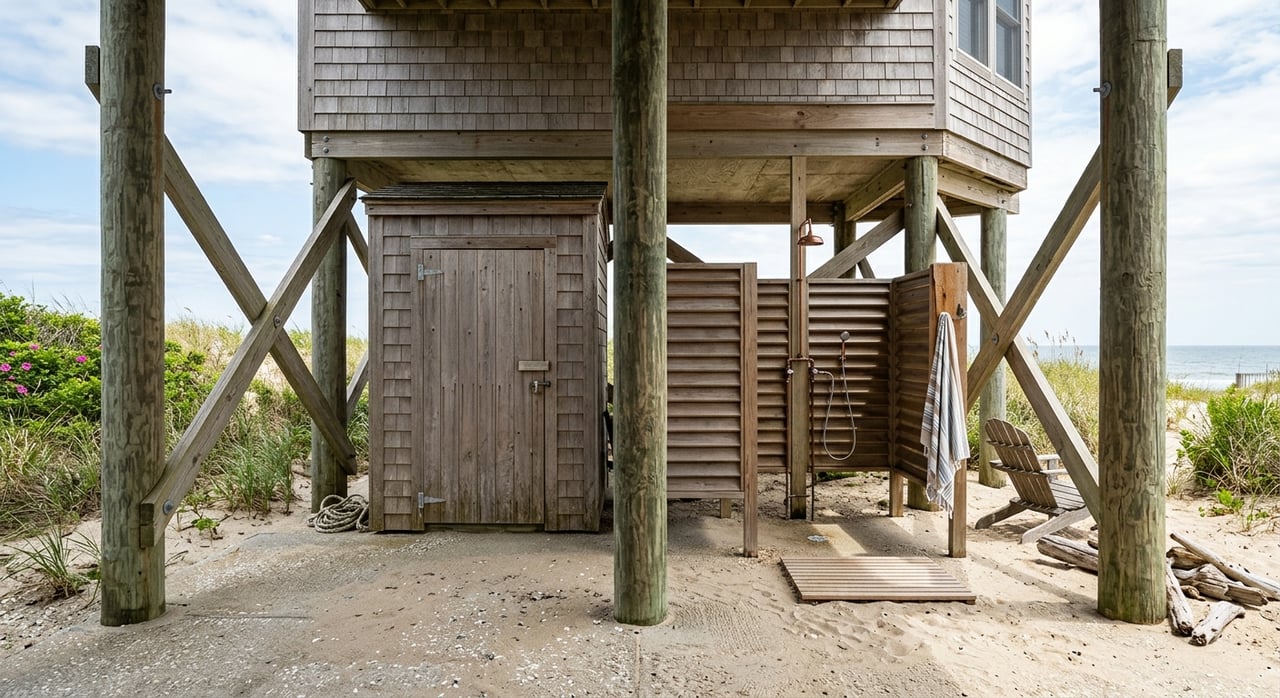
- Outdoor rinse area
- Storage for beach and fishing gear
- Boat-trailer compatibility
- Efficient floor plan
- Lot constraints tied to flood zones, setbacks, and septic systems
These factors line up with how Frisco visitors often use a home. Guests who come for beach weeks, ORV outings, and fishing trips usually care about convenience, cleanup, gear storage, and easy in-and-out access.
Evaluate beach access and recreation fit
A Frisco vacation rental should match the reasons people book Frisco in the first place. If your likely guest is coming for summer beach time, a property’s distance to beach access and overall ease of use can directly affect appeal.
Frisco Beach offers more than sand and surf. The area includes showers, restrooms, accessible parking, and vehicle and trailer parking, which can make the guest experience easier. The National Seashore also allows beach fires on Frisco’s ocean beaches from May 1 through November 15 with a free permit.
That does not mean every nearby property performs the same way. Investors should compare homes based on how easily guests can reach the beach, whether the setup supports outdoor recreation, and whether the home fits common Frisco stay patterns like family beach trips and fishing-focused visits.
Check permits before you assume upside
If you are buying with plans to renovate or expand, permit review is essential. Dare County states that new construction, major remodels, plumbing, electrical, and mechanical work, along with some oceanfront, soundfront, or canal projects, require permits.
The county’s permit checklist also calls for items such as a survey, water-tap authorization or private well details, a septic permit, and floor-plan review. That means your improvement plan should be tested against real county requirements before you count on added value.
This is especially important in a market where site conditions can limit what is realistic. A home may look like it has room for upgrades, but flood realities, septic constraints, and lot coverage limits can change what is actually possible.
Factor in flood insurance early
Flood insurance is not a side note in Frisco. It is a core carrying cost and a major part of underwriting a vacation-rental purchase in unincorporated Dare County.
Dare County states that standard homeowners insurance does not cover flood damage. It also notes that NFIP flood insurance is required by law for federally backed mortgages, and premiums can vary based on flood zone, elevation, and the age of the structure.
Timing matters too. Dare County says there is a 30-day waiting period before flood coverage begins. The county also states that unincorporated Dare County is a Class 6 CRS community, which equals a 20% discount on qualifying flood policies issued on or after April 1, 2022.
For investors, the practical takeaway is simple: get flood-zone and elevation information early, and build insurance estimates into your real cost analysis before you make an offer.
Treat erosion and storm risk as valuation inputs
On Hatteras Island, storm resilience is part of the investment equation. Dare County says wind, waves, storms, and rising sea levels are driving significant erosion on Hatteras Island, and some properties have become precariously close to the ocean.
The county also notes that erosion can threaten infrastructure and island access. That means you should not treat coastal risk as a vague future concern. It can affect access, utility, repair risk, and long-term value.
Storm impacts can also affect occupancy and operations. Dare County says flooded properties should not use septic systems, and a structure can be tagged unsafe for occupancy with electrical service disconnected if a wastewater system is compromised or if ocean impacts affect access or egress. North Carolina’s Vacation Rental Act also requires tenants to comply with mandatory evacuation orders.
Understand what occupancy tax does and does not tell you
Dare County imposes a 6% occupancy tax on gross receipts from transient accommodations, including private residences and cottages. There are exemptions for rentals under 15 days in a calendar year and for stays of 90 or more continuous days.
That is useful for understanding operating rules, but not for verifying a property’s past income. Dare County states that occupancy-tax returns are not public records, so you cannot use county filings to rebuild a home’s rental revenue history.
Because of that, investors usually need to combine public parcel data with rental-history reports from brokers, property managers, or listing records. If a home is being marketed based on income potential, you should ask for support that goes beyond general claims.
Build projections from true local comps
When you project rental performance in Frisco, broad averages are less helpful than property-specific comparisons. The cleanest comp set is made up of nearby homes with similar flood zones, parking counts, bedroom counts, beach access, and amenity packages.
That approach fits Frisco well because the county treats vacation homes as a distinct product type, and local demand is closely tied to beach access, ORV access, and outdoor recreation. A home with better parking, easier beach logistics, and stronger gear storage may outperform a similar-sized property that lacks those practical advantages.
As you compare candidates, focus on questions like these:
- Is the flood exposure similar?
- Does the parking count support the expected guest group?
- Is beach access easy and clear?
- Are the amenities aligned with Frisco-style stays?
- Does the lot layout create operational headaches?
The more closely your comparison set matches the subject home, the more useful your revenue projection will be.
Screen for turnover and operations
A property can look great on paper and still be difficult to operate. In Frisco, trash handling, turnover timing, and guest communication can have a real effect on owner experience.
Dare County Public Works services unincorporated Frisco. The county says residential pickup on the beach side runs Monday and Thursday in the off-season, and Monday, Thursday, and Saturday during the Memorial Day to Labor Day peak period.
That makes trash storage, bin placement, and turnaround-day planning worth reviewing before you buy. If a house has limited staging space or awkward access, those small logistical issues can become recurring management problems.
Match management style to property complexity
Not every vacation rental requires the same level of oversight. In Frisco, weather changes, beach conditions, and storm-related disruptions can add complexity, especially for owners who live out of town.
Based on county and National Park Service conditions, many remote owners need either full-service property management or a very strong remote setup for guest communication, storm cancellations, and vendor coordination. This is not a formal county rule, but it is a practical reality in a coastal market where conditions can shift quickly.
If you are evaluating a home from an investor standpoint, ask yourself how easy it will be to manage from a distance. The answer often depends on the property’s location, physical setup, and exposure to weather-related disruptions.
A practical Frisco rental checklist
Before you move forward on a Frisco investment property, it helps to run through a simple screen:
- Confirm flood zone, elevation context, and likely flood-insurance costs
- Review county parcel, zoning, easement, and permit records
- Check parking count and trailer compatibility
- Measure beach-access convenience
- Evaluate outdoor rinse areas and gear storage
- Verify septic and site limitations before planning upgrades
- Consider erosion exposure and storm access risks
- Review rental-history support from credible local sources
- Plan for trash handling and turnover logistics
- Decide whether the home fits self-management or professional management
A strong Frisco vacation rental usually works well both financially and operationally. The best opportunities are often the homes where those two things line up.
If you are weighing Frisco as part of your Outer Banks investment search, it helps to have local guidance that goes beyond the listing sheet. Cooper and Jenny Hawk help buyers look at the full picture, from property setup and location fit to practical questions that affect long-term use and resale. When you are ready to explore opportunities on Hatteras Island, connect with OBX Beach Properties.
FAQs
What records matter most for a Frisco vacation-rental property?
- Dare County parcel data, flood information, zoning details, and building-permit records are some of the most useful starting points because Frisco research typically runs through county-level systems.
What physical features matter most for a Frisco rental home?
- Investors often focus on beach-access distance, parking count, outdoor rinse space, gear storage, trailer compatibility, layout efficiency, and lot constraints tied to flood, setback, and septic realities.
What does Dare County occupancy tax mean for Frisco investors?
- Dare County charges a 6% occupancy tax on gross receipts from transient accommodations, but county occupancy-tax returns are not public records, so they cannot be used to verify a property’s past rental revenue.
What should buyers know about flood insurance in Frisco?
- Dare County says flood insurance premiums can vary by flood zone, elevation, and age of structure, standard homeowners insurance does not cover flood damage, and there is a 30-day waiting period before coverage begins.
What makes a Frisco home attractive to vacation renters?
- Homes that support summer beach weeks, fishing trips, ORV outings, and easy outdoor cleanup tend to align well with Frisco’s main demand drivers, especially when beach access and practical amenities are strong.
