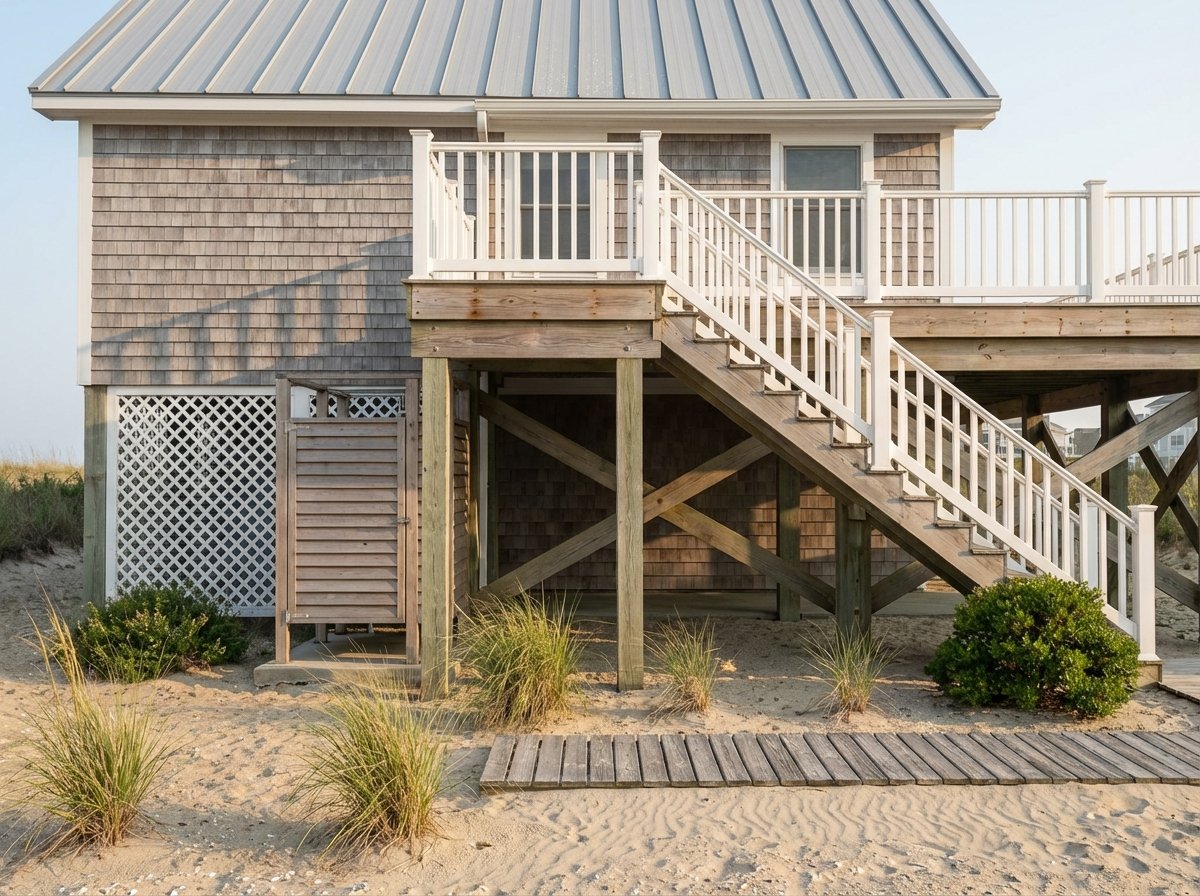
You want a breezy beach escape in Kill Devil Hills, but also a smart, low‑stress buy. With shifting dunes, flood maps, and coastal rules in play, sorting listings can feel overwhelming fast. This guide breaks the process into clear steps so you can compare cottages confidently, protect your budget, and focus on the lifestyle you came for. Let’s dive in.
Start with lifestyle and location fit
Oceanfront vs. semi‑oceanfront
Oceanfront puts you right on the dune with the most immersive beach experience and strong view potential. It also brings higher exposure to wind and surge, stricter rebuild and elevation rules, and typically higher insurance and maintenance costs. Semi‑oceanfront (one row back) often gives you a short walk and views with lower exposure and more manageable ongoing costs. We’ll help you weigh these tradeoffs on each block so you don’t overpay for benefits you don’t need.
Proximity to public beach access
You’ll use a named public access for daily walks, guests, and carts. Check how close a cottage is to an official crossover and parking by reviewing the town’s list and map on the Kill Devil Hills Beach page. You can confirm nearby lifeguard coverage, beach‑use rules, and access names directly on the town’s beach and access information. A short, simple walk often matters more than an extra half‑bath.
Beach use and parking rules
Kill Devil Hills publishes rules for beach use, lifeguards, and parking at access points, including permits for restricted hours. If easy guest parking or beach‑day logistics are a priority, verify the nearest access and any overnight limits on the town’s beach page. Clear expectations make it easier to host visitors without hassle.
Budget beyond the purchase price
Insurance and carrying costs
Coastal cottages typically require flood insurance if your lender mandates it, plus wind or hurricane coverage with possible named‑storm deductibles. Before you write an offer, look up the flood zone and Base Flood Elevation, request any Elevation Certificate, and get a pre‑offer premium estimate. The FEMA Flood Map Service Center is the authoritative source for flood‑zone lookups and BFEs; start with the FEMA Map Service Center. For guidance on coverage types and market conditions in North Carolina, review the NC Department of Insurance consumer resources.
Coastal wear and maintenance
Salt air accelerates corrosion on connectors, fasteners, and exposed metal. Elevated homes on pilings need periodic checks of bracing, splice points, and hardware. FEMA’s coastal building guidance highlights best practices for siting and maintaining coastal structures; it’s a helpful lens for planning inspections and long‑term upkeep. You can reference FEMA’s coastal building science resources when speaking with your inspector.
Know your flood and hazard profile
Check FEMA flood maps and elevation early
Flood‑zone designation affects mortgage terms, insurance costs, and rebuild requirements. During your search, pull the property’s flood‑map printout, note the BFE, and ask the seller if an Elevation Certificate exists. You can verify maps and Letters of Map Change on the FEMA Flood Map Service Center. A few minutes here can save you thousands over time.
Understand sea‑level rise and high‑tide flooding
Planning tools from NOAA can help you visualize long‑term inundation scenarios and nuisance‑flooding frequency near your block. Use the NOAA Sea Level Rise Viewer for a planning‑level look at how higher tide levels could change access routes or low areas. It’s not a site‑specific engineering study, but it’s a smart way to compare neighborhoods with clear eyes.
Erosion, dunes, and beach projects
Shorelines on the Outer Banks move with storms and seasons. Towns sometimes pursue nourishment or emergency berm projects to protect infrastructure and beach access. Ask whether your block has seen nourishment, dune restoration, or emergency berm work; FEMA documents past emergency beach berm projects that illustrate the kinds of efforts towns may undertake after storms. This context helps you understand dune health and potential future projects.
Age, construction, and systems
Pre‑FIRM vs. newer construction
Older cottages built before modern flood maps and codes can be appealing entry points, but they may carry higher insurance and upgrade costs. If substantially damaged, they often must be elevated or rebuilt to current standards. Ask for the town’s permit history and any prior Elevation Certificates to understand what’s been updated and what remains. Newer elevated builds typically have more resilient details and lower long‑term risk.
Foundations and structural review
On the OBX, piled foundations are common. Your inspector should evaluate bracing, signs of settlement, connector corrosion, and deck attachments. When issues are found or if the structure is unusually tall or exposed, add a structural engineer with coastal experience. FEMA’s coastal construction guidance is a good framework for what to examine and maintain in this environment.
Utilities and mechanicals above BFE
HVAC units, electrical panels, and water heaters should be elevated above the BFE or otherwise protected. This reduces flood risk and can help with insurance. FEMA outlines ways to elevate and protect utilities in coastal homes; review their guidelines on elevating in flood zones as you plan upgrades.
Permits, setbacks, and what you can change
Town permits and inspections
Kill Devil Hills’ Planning & Inspections Department issues building and zoning permits and coordinates flood and CAMA compliance. Before you commit, request the property’s permit history, including exterior features like decks, pools, and walkways. For current contacts and submittal steps, see the town’s Building Permits and Inspections page. Confirm there are no outstanding violations or unpermitted additions.
State coastal rules and oceanfront setbacks
North Carolina’s Coastal Resources Commission and Division of Coastal Management set ocean‑hazard rules under CAMA. Recent CRC changes affected how beachfront setbacks are measured and how local Beach Management Plans may apply. Always confirm the allowed setback for your lot and ask whether your block is within a town‑level management plan. You can track rule updates through the CRC’s agendas and minutes and verify lot‑specific details with the town planner during due diligence.
Checklist: from browsing to due diligence
Quick pre‑offer checklist
- Confirm oceanfront vs. semi‑oceanfront and how the listing relates to the dune and road.
- Verify nearest public crossover and parking using the town’s beach access list.
- Look up flood zone and BFE on the FEMA Flood Map Service Center; note the FIRM panel.
- Ask if an Elevation Certificate exists and request a pre‑offer flood‑insurance quote.
- Confirm utilities and waste system type; if septic, request Dare County Health documentation and prior permits.
Deeper due diligence (under contract)
- Obtain flood‑map printouts and any Elevation Certificate; finalize flood‑insurance pricing via your insurer using the FEMA MSC data.
- Request full permit history and copies of any CAMA‑related permits; verify with Kill Devil Hills Planning & Inspections.
- Ask for documented insurance claims history and prior‑loss reports; review NC guidance at the Department of Insurance.
- Schedule a home inspection with coastal experience; add a structural engineer if pilings or settlement concerns arise. Use FEMA’s coastal building guidance as context.
- For oceanfront lots, confirm the applicable setback source and whether a Beach Management Plan affects your block by checking with the town planner and reviewing CRC rule updates.
- If rental income matters, request historical rental performance and occupancy‑tax remittance records; confirm any local registration or tax requirements with town and county offices.
Common red flags to investigate
- No Elevation Certificate for a home in an A or VE flood zone, making insurance costly and uncertain.
- Unusual or repeated storm claims, or very high wind/flood deductibles without a clear reason.
- Unpermitted additions on the ocean side, or decks and walkways without documented approvals.
- Visible corrosion on connectors, rot at piling bases, or weak lateral bracing.
- Evidence of chronic overwash or dune breaches in historical records. Verify flood‑zone details on the FEMA MSC and use FEMA’s coastal guidance to frame repair priorities.
How we help you choose confidently
You deserve a cottage that fits how you live, not just a view. As local agents who work daily across Kill Devil Hills and the central Outer Banks, we help you compare oceanfront and semi‑oceanfront blocks, clarify flood and setback questions with town staff, and line up inspections with coastal pros. For investors, we review rental performance, management options, and resale considerations so you can balance lifestyle with returns.
From first browse to closing, we guide document requests, permit checks, insurance quotes, and contractor walk‑throughs. You get a clear picture of risk, cost, and opportunity before you commit. When you’re ready to explore cottages that meet your goals, connect with OBX Beach Properties to get started.
FAQs
What’s the difference between oceanfront and semi‑oceanfront in Kill Devil Hills?
- Oceanfront fronts the dune and delivers the most direct beach access and views but typically carries higher exposure, stricter rebuild rules, and higher insurance and maintenance than semi‑oceanfront one row back.
How do I check a cottage’s flood zone and BFE?
- Look up the address on the FEMA Flood Map Service Center, note the flood zone and BFE, and ask the seller for any Elevation Certificate to refine insurance estimates.
Do I need permits for decks or walkways on an oceanfront lot?
- Yes. Contact Kill Devil Hills Planning & Inspections to confirm permit needs and any CAMA coordination; start with the town’s Building Permits and Inspections page.
How close can I build to the ocean in Kill Devil Hills?
- Setbacks follow state CAMA ocean‑hazard rules and may be influenced by local management plans; confirm lot‑specific setbacks with the town planner and follow CRC rule guidance.
What insurance should I expect for a beach cottage?
- Expect flood insurance if required by your lender and wind or hurricane coverage with possible deductibles; review options and consumer guidance at the North Carolina Department of Insurance.
How can I see long‑term flood or inundation risk near my block?
- Use the NOAA Sea Level Rise Viewer for planning‑level visuals of higher tide scenarios and potential nuisance flooding, then confirm local conditions during due diligence.
