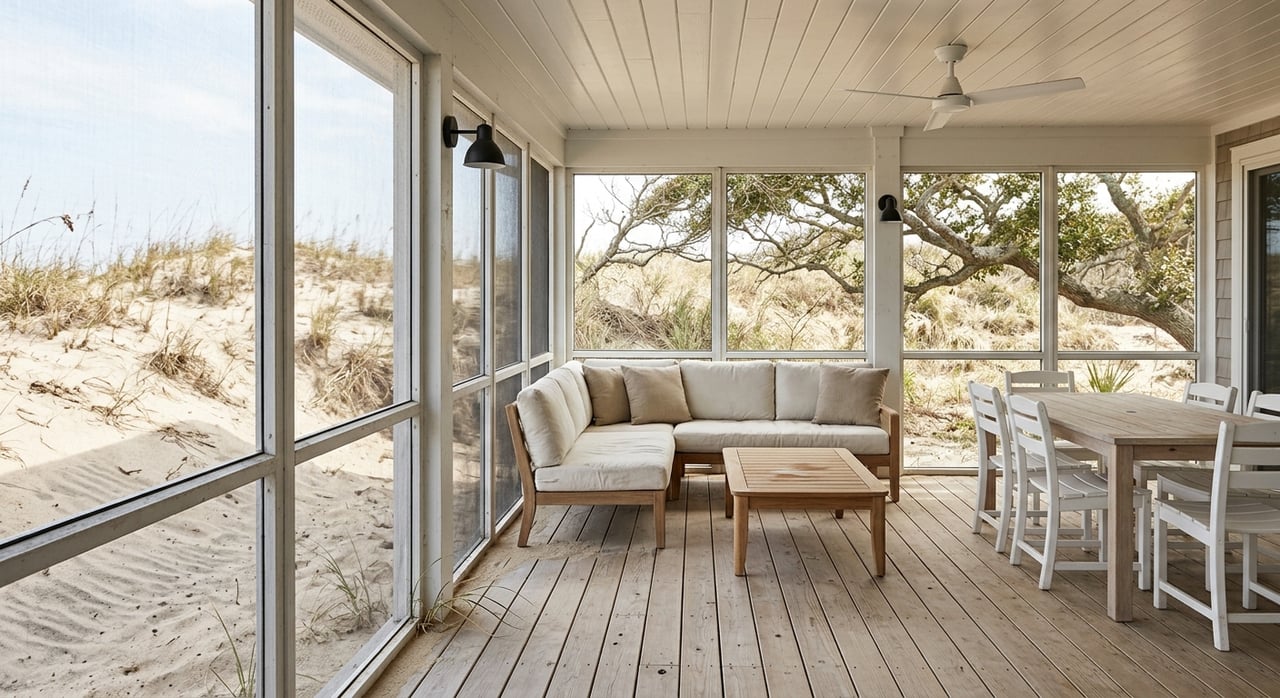
If your Duck rental feels like a summer-only property, you could be leaving real demand on the table. Shoulder season in Duck has real appeal for travelers who want milder weather, fewer crowds, and a more relaxed Outer Banks experience. When you understand who books in spring, fall, and early winter, you can position your property to capture more nights and stronger interest beyond peak weeks. Let’s dive in.
Why Duck stands out in shoulder season
Duck already offers many of the ingredients that off-peak travelers want. The town is known for its quieter, residential feel, and visitors have more to enjoy than just peak beach weather. The soundside boardwalk, town park, and multi-use trail give guests reasons to visit even when they are not planning an all-day beach trip.
The weather story also helps. Nearby NOAA climate normals for Manteo show average temperatures of 59.6°F in April, 67.4°F in May, 73.9°F in September, 64.8°F in October, and 54.5°F in November. The Outer Banks tourism authority also describes spring and fall as pleasant seasons with fewer people, which supports the idea that Duck can attract guests well outside midsummer.
Seasonal events add another layer of demand. The Duck Jazz Festival takes place on Columbus Day weekend, and the Duck Yuletide Celebration arrives in early December. The broader Outer Banks holiday season runs from Thanksgiving through January 6, which gives you a wider booking window than many owners assume.
Who books Duck rentals off-peak
Shoulder-season demand usually comes from different traveler groups than your core summer audience. If you market to the same guest profile year-round, your listing may miss people who are actively looking for a quieter and more flexible stay.
Outdoor travelers
Fall is one of the clearest demand drivers in the Outer Banks. The tourism bureau highlights fishing, birding, surfing, and stargazing, and it notes that surf and pier fishing season begins in March and peaks in May and November. Since Duck offers easy access to beaches, trails, and open-air spaces, your rental can work well as a base for these kinds of trips.
Couples and small groups
Duck naturally fits travelers who want a slower pace. The soundside boardwalk, local dining, shops, and scenic views support short getaways built around walking, relaxing, and enjoying the town itself. This is a different selling point than midsummer, when guests often focus mainly on beach time.
Families and holiday visitors
Duck’s public spaces support family travel across more than one season. The town park includes a playground, amphitheater, dog-friendly water fountain, and kayak and canoe launch. Holiday travelers may also look for rentals that feel comfortable for gathering, cooking, and spending time together indoors and outdoors.
Pet owners
Duck allows pets on the beach under specific rules and permits leashed pets in the park. That makes pet-friendly rentals especially appealing for drive-to travelers who want to bring the whole household along. In shoulder season, this can help your home stand out in a less crowded booking field.
Remote workers and longer-stay guests
Expedia Group’s 2025 Traveler Value Index points to a growing work-and-leisure audience. Travelers are blending trips with work, using social media for inspiration, and putting a premium on trust signals like strong reviews. For Duck owners, that creates a practical opportunity to attract guests who can stay longer if the home feels easy to live and work in.
Features that help shoulder-season performance
A strong off-peak rental strategy usually starts with the house itself. In summer, guests may forgive a few weak spots if they plan to spend all day outside. In spring, fall, and winter, comfort and function matter more.
Prioritize indoor comfort
Shoulder-season guests often spend more time inside the home. Reliable heating and cooling, comfortable seating, a well-equipped kitchen, and inviting common spaces can make a meaningful difference in both reviews and repeat bookings. If your property has a fireplace or another cozy gathering area, that feature may deserve more attention in your listing.
Vrbo’s 2025 planning guide also points to standout amenities such as game rooms, bunk beds, and pools as features that can help homes compete. Not every property needs every upgrade, but the larger point is simple: the more usable and enjoyable your home feels beyond the beach, the stronger your off-peak position can be.
Make longer stays easier
Remote workers and extended-stay guests notice practical details. Dependable Wi-Fi, good lighting, and a table or desk that works as a real workspace can help your home appeal to travelers mixing business with leisure. Streaming access and laundry also matter more when guests are staying several nights or more.
Improve outdoor convenience
Shoulder-season guests still want to enjoy the outdoors, even if the weather is less predictable. Covered decks, outdoor seating, bike storage, rinse areas, and clear parking access can improve the overall experience. These are not flashy upgrades, but they can remove friction and support better guest reviews.
Clarify access before guests arrive
In Duck, clear communication is part of the product. The town notes that beach access is private rather than public, there is no public beach parking, and renters should confirm access details with their HOA or rental company. If guests arrive confused about how to reach the beach, the stay can start on the wrong foot.
That means your pre-arrival communication should be specific and simple. Share parking instructions, beach access details, pet rules if relevant, and any seasonal notes guests need to know before they arrive. This is especially important for off-peak guests, who may be visiting Duck for the first time.
Market the Duck experience, not just the house
Many shoulder-season listings underperform because they still read like peak-summer ads. If your property description focuses only on beach days and sunshine, you may miss travelers looking for a different kind of trip.
Use photos that fit the season
Expedia reports that more than half of travelers use social media for trip ideas, and visual inspiration matters. For Duck, that means showcasing more than ocean views. Photos of the boardwalk, soundside sunsets, cozy living areas, dining spaces, decks, and walkable town experiences can help guests picture an off-peak stay.
Describe amenities clearly
Travelers are also willing to pay more for better reviews, which means your listing needs to build trust quickly. Make amenity descriptions accurate, specific, and easy to scan. Instead of generic phrases, highlight features that support shoulder-season comfort, such as a fully equipped kitchen, strong Wi-Fi, flexible sleeping arrangements, laundry, and covered outdoor space.
Lean into low-crowd appeal
Duck’s quieter identity is a real advantage. Off-peak guests are often not trying to recreate a busy July vacation. They want easier walks, calmer mornings, scenic evenings, and a more laid-back rhythm, so your listing copy should reflect that experience.
Adjust pricing and availability early
Waiting for last-minute bookings can limit your results. The research points to a better approach: open your shoulder-season calendar early, keep your stay rules flexible where appropriate, and test modest incentives instead of deep discounts.
Vrbo’s 2025 guide notes that October is a sweet spot for savings and recommends weekly and monthly discounts. The Outer Banks winter guide also says off-season homes can rent at much lower rates than peak dates. In practice, that suggests a few smart moves:
- Open fall and winter availability well in advance
- Consider shorter minimum stays when demand patterns support it
- Test weekly or monthly discounts for longer bookings
- Use pricing that reflects value without racing to the bottom
The timing matters too. The tourism bureau says January is a major reservation month for Outer Banks vacation rentals, where vacation rentals make up about 80% of lodging. If you want holiday and winter bookings, it helps to have those dates visible and market-ready early.
Plan for fall weather communication
Storm season is part of the shoulder-season conversation in coastal North Carolina. Duck’s official emergency preparedness guidance says Atlantic hurricane season runs from June 1 through November 30 and peaks in late August and September. That does not mean you should avoid fall bookings, but it does mean guests benefit from clear and calm communication.
Set expectations before arrival. Share concise information about weather awareness, local procedures, and any policy details guests may need to review ahead of time. When guests feel informed, they are more likely to book with confidence.
What this means for rental owners and investors
For many owners, the biggest shift is mental. Duck shoulder season works best when you stop selling only a summer beach house and start presenting a comfortable base for low-crowd coastal living. The strongest demand drivers in the research are nature, dining, boardwalk walks, event weekends, pet-friendly travel, and longer stays.
That has direct value for both current owners and buyers evaluating investment potential. If you are comparing properties in Duck, shoulder-season performance may come down to practical details like layout, indoor comfort, work-friendly space, access clarity, and how well the home fits a quieter travel pattern. Those details can influence occupancy, guest satisfaction, and long-term resale appeal.
If you are thinking about buying, selling, or repositioning a Duck rental, OBX Beach Properties can help you look at the property through both a lifestyle and investment lens.
FAQs
What makes Duck attractive for shoulder-season rental demand?
- Duck offers a quieter residential setting, a soundside boardwalk, a town park, a trail system, seasonal events, and milder spring and fall temperatures that support trips beyond summer.
Which guests are most likely to book a Duck rental outside summer?
- The strongest off-peak segments include outdoor travelers, couples, small groups, families, pet owners, holiday visitors, and remote workers seeking longer stays.
What property features help a Duck rental perform better in shoulder season?
- Reliable heating and cooling, a well-equipped kitchen, comfortable seating, strong Wi-Fi, workspace options, laundry, covered outdoor areas, and clear arrival instructions can all support better off-peak bookings.
Why are pre-arrival instructions important for Duck rentals?
- Duck has private beach access patterns, limited parking, and seasonal rules that can confuse first-time guests, so clear instructions help create a smoother arrival experience.
When should you open and promote shoulder-season dates for a Duck rental?
- It is smart to open and market fall, holiday, and winter dates early, especially since January is a major reservation month for Outer Banks vacation rentals.
How should you market a Duck rental for spring and fall guests?
- Focus on quiet beaches, boardwalk walks, soundside sunsets, local dining, flexible stays, and the home’s comfort and functionality rather than relying on summer-only messaging.
